
Strategic executive assistant calendar management is the systematic design and active defense of an executive’s schedule as a performance asset – specifically architecting deep-work blocks, meeting clusters, recovery buffers, and access control tiers that align every 60-minute segment of the calendar with the executive’s highest-leverage cognitive and relational priorities. According to McKinsey research, 61% of executives report that at least half the time they spend in meetings is ineffective, and the average Fortune 500 CEO spends 72% of working hours in meetings; the role of expert executive assistant calendar management is to structurally prevent that pattern from consuming the time when the executive’s most valuable thinking actually occurs. A well-designed calendar architecture, managed by a skilled virtual executive assistant, typically recovers 6 to 12 hours of strategic executive time per week – hours redirected from reactive scheduling overhead to the deep work that drives organizational outcomes.


Most calendars fill themselves. Meeting requests arrive, slots open, acceptances go out – and by the time an executive looks at next week, the window for clear, focused strategic thinking has already been occupied.
Excellent executive assistant calendar management reverses this dynamic. Rather than allowing the calendar to fill reactively, a skilled virtual EA designs the schedule proactively – beginning with the work that matters most and building the rest of the calendar around it.
This guide documents the full strategic framework: how the best VEAs approach calendar architecture, the specific systems they build, and the techniques they use to protect deep work time against constant organizational pressure.
Executives ready to implement this calendar system without the overhead of building it themselves can explore GPERO’s dedicated virtual executive assistant services – where calendar architecture is one of the first functions a matched VEA takes full ownership of.
Why the Calendar Is the Most Strategic Document in an Executive’s Life
Before examining how to manage a calendar well, it is worth understanding why the stakes are so high.
An executive’s calendar is not a scheduling tool. It is a resource allocation system. Every decision about which meeting to accept, which time block to protect, and which request to decline is a decision about where organizational attention, energy, and leadership capacity will flow.
Research from the Harvard Business School tracking of 27 CEOs across 13 weeks found that only 28% of CEO time is available for individual, focused work – and this is entirely dependent on whether the calendar was deliberately designed to protect it. Without that deliberate design, individual work time compresses further under meeting pressure until strategic thinking becomes a secondary activity rather than a primary one.

The consequences of poor calendar architecture compound over time:
- Decision quality degrades. Executives who make 30 decisions per day across back-to-back meetings are not applying the same cognitive quality to each one. Research on decision fatigue consistently shows that decision quality declines measurably after extended periods of high-frequency decision-making.
- Strategic work gets deferred indefinitely. When deep work blocks are not protected explicitly, they consistently get displaced by meetings. The tasks that require sustained concentration – strategic planning, board preparation, complex writing, investor narrative development – accumulate rather than advance.
- Reactive patterns entrench. Organizations adapt to how their leaders operate. A CEO who is perpetually in meetings signals to the organization that meetings are the operating system. Breaking this pattern requires explicit calendar redesign, not personal discipline alone.
- Burnout risk increases. Research cited by BCG on CEO time management consistently identifies calendar fragmentation – the experience of moving between disparate, unconnected activities at high frequency – as one of the primary structural contributors to executive burnout.
Strategic executive assistant calendar management addresses all of these dynamics by design rather than by exception.
The Foundational Principle: Design From the Inside Out
The most important conceptual shift in calendar architecture is moving from outside-in to inside-out scheduling.
Outside-in scheduling – the default mode for most executives without dedicated calendar management – works like this: the calendar opens to meeting requests, those requests fill available slots, and the executive works in whatever time remains.
Inside-out scheduling – the foundation of strategic executive assistant calendar management – works differently: the executive’s most important work is scheduled first, in protected blocks, before any external meeting requests are considered. Every additional item is then evaluated against those protected priorities before it is allowed into the calendar.
This shift sounds simple. In practice, it is organizationally difficult – because it requires saying no to meeting requests from people who have real organizational standing to make those requests. This is precisely why calendar management requires a skilled human VEA rather than a scheduling tool: the access decisions require judgment, relationship intelligence, and diplomatic communication that no automated system can reliably provide.
The 7-Layer Calendar Architecture Framework
A comprehensive calendar management system operates across seven distinct layers, each building on the previous. Skilled VEAs implement all seven layers to create a calendar that is both strategically aligned and operationally resilient.
Layer 1: Deep Work Block Identification and Protection

The first action in any calendar architecture engagement is identifying the executive’s peak cognitive performance windows – the hours each day when focused, high-quality thinking produces the best output – and protecting those hours as non-negotiable before any other scheduling occurs.
Research on cognitive performance timing, referenced extensively in Cal Newport’s foundational work on deep work, consistently establishes that most individuals perform their most cognitively demanding work most effectively during a 2 to 4 hour window in the first half of their working day. For some executives this is 6 to 9 AM; for others it is 8 to 11 AM or 9 AM to noon.
A skilled VEA identifies these windows through explicit conversation with the executive in the first onboarding session and immediately protects them:
- Blocking the windows in the calendar as recurring, private appointments labeled clearly as focused work or strategic thinking time
- Setting these blocks as unavailable in any shared scheduling tools
- Establishing a standing instruction that no meeting request will be scheduled during these windows without explicit executive approval
- Communicating the unavailability pattern to regular meeting requesters diplomatically and proactively
The result is that every morning – regardless of what organizational demands arrive overnight – the executive’s highest-quality cognitive hours are already committed to their most important work.
Layer 2: Meeting Cluster Architecture

One of the most damaging calendar patterns at the executive level is the scattered meeting: a 9 AM call, a 10:30 AM check-in, a 12 PM team sync, a 2:30 PM strategy session, and a 4 PM external call. Each meeting may individually be necessary. Together, they fragment the entire day into segments too small for deep work and too disjointed for sustained momentum.
Meeting cluster architecture addresses this by consolidating all meetings into designated windows – typically afternoon blocks – while preserving the morning for focused work.
The specific mechanics involve:
- Designating 2 to 3 meeting cluster windows per day: For example, 10 AM to noon and 1 PM to 4 PM become the active meeting zones; mornings before 10 AM and evenings after 4 PM are protected
- Batching by meeting type within clusters: Strategy meetings grouped in the morning cluster (if the executive prefers strategic discussions in the AM); operational check-ins clustered in the afternoon; external stakeholder calls consolidated into specific afternoons per week
- Building buffer blocks between every meeting: A 15-minute buffer after each meeting allows cognitive transition, prevents back-to-back cognitive compression, and provides space to capture notes and prepare for the next conversation
- Designating one or two meeting-free days per week: Many of the most effective executive calendars designate Wednesday or Friday as low-meeting days – creating a mid-week or end-of-week reset window for intensive project work
Research from Worklytics demonstrates that teams implementing structured no-meeting blocks reduce meeting hours by an average of 15% – reclaiming an average of 6.3 hours per employee per week. At the executive level, where the value of recovered time is highest, the compounding impact is proportionally greater.
Layer 3: Access Tiering and Meeting Request Triage
Not all meeting requests carry equal organizational value – and a skilled VEA applies a tiered access framework to every inbound request before it reaches the executive’s awareness.

A practical access tiering system typically operates on four levels:
Tier 1 – Immediate acceptance: Board members, investors, the CEO’s direct reports, and major clients whose requests should be accommodated promptly within available meeting cluster windows.
Tier 2 – Standard acceptance with scheduling management: Internal senior leaders, strategic partners, and regular stakeholders whose meetings are valuable but should be consolidated, batched, and scheduled within designated windows rather than accepted at any time.
Tier 3 – Evaluate and propose alternatives: Meeting requests from mid-level stakeholders or external parties that may be better served by a shorter call, an email exchange, or a delegation to another team member. The VEA evaluates these and proposes the highest-leverage handling method before routing to the executive.
Tier 4 – Decline or redirect: Speculative vendor calls, general network outreach, low-priority requests, and any meeting that does not have a clear, specific agenda with a defined outcome. The VEA declines these diplomatically on the executive’s behalf.
This access tiering system requires the VEA to have a current, detailed understanding of the executive’s strategic priorities, key relationships, and current sprint focus. Without that context, triage decisions default to conservative acceptance – which produces the same fragmented calendar the system is designed to prevent.
Layer 4: Energy-Aligned Scheduling

Beyond the structure of when meetings occur, a sophisticated calendar architecture considers the nature of what each meeting requires and matches it to the appropriate cognitive energy state.
Different meeting types draw on different cognitive resources:
- Creative and strategic work: Requires high prefrontal engagement; best scheduled in the first 2 to 3 hours of the working day when mental energy and glucose metabolism are optimal
- Collaborative and relational meetings: Board calls, investor conversations, team leadership sessions; require social energy and interpersonal presence; effectively scheduled in mid-morning after the deep work block
- Operational and status meetings: Lower-energy coordination work; appropriately scheduled in early-to-mid afternoon when cognitive demand is lower
- Networking and external relationship calls: Flexible in scheduling; placed in late afternoon when the executive’s energy profile is suited to conversational rather than analytical engagement
A skilled VEA learns this energy profile through direct conversation with the executive and maintains it as a standing scheduling criterion. Over time, this profile is refined as the VEA observes which schedule configurations produce the best executive performance and feedback.
Layer 5: Preparation and Recovery Buffer Management

A meeting on the calendar is not a discrete event; it is an activity with a preparation requirement before it and a recovery and follow-through requirement after it.
Most calendars treat meetings as point events, ignoring both the preparation cost and the cognitive recovery cost. A well-managed executive calendar treats every significant meeting as a three-part commitment:
Pre-meeting preparation block: Scheduled 15 to 30 minutes before any significant meeting – board sessions, investor calls, client meetings, major strategic reviews. Used for reviewing the VEA-prepared briefing document, refreshing context on the attendee relationships, and mental transition into the appropriate discussion mode.
Post-meeting follow-through block: Scheduled 15 to 20 minutes after significant meetings for capturing decisions, reviewing action items, and directing follow-up communications. A VEA who has attended or monitored the meeting can use this window to send follow-up notes while the executive transitions to the next activity.
Recovery whitespace: Strategic blocks of 15 to 30 minutes distributed through the day – not scheduled with any meeting or task – that provide decompression time, reduce cognitive load accumulation, and make the executive more present and effective in subsequent meetings.
Executives who operate with these buffers consistently report higher meeting quality, better decision-making, and reduced end-of-day cognitive depletion compared to those who run back-to-back schedules.
Layer 6: Weekly and Quarterly Calendar Rhythm Design

Effective executive assistant calendar management does not only operate at the daily meeting level; it operates at the weekly and quarterly rhythm level as well.
Weekly rhythm design involves establishing a consistent weekly template that the executive can internalize and that shapes all scheduling decisions:
- Monday: Light meetings in the morning; focus on weekly priority setting; team leadership calls in the afternoon
- Tuesday and Thursday: Peak meeting days with full cluster scheduling
- Wednesday: Protected mid-week deep work day; minimal meetings; strategic project advancement
- Friday: Administrative closing; end-of-week reviews; light external scheduling; preparation for the following week
Quarterly rhythm design involves mapping the executive’s calendar 12 weeks in advance around high-demand periods:
- Board meeting windows: Pre-block 3 to 4 days before each board meeting for preparation
- Fundraising sprint periods: Flag calendar to minimize operational meeting load during active investor outreach
- Product launch windows: Protect focus time during crunch periods; batch external meetings before and after rather than during
- Conference and travel clusters: Consolidate external commitments into dedicated travel windows rather than allowing them to fragment multiple separate weeks
A VEA who maintains a running 12-week calendar view can proactively identify and protect the executive’s time against future demand spikes before those spikes arrive.
Layer 7: Calendar Hygiene and Continuous Optimization

Calendars decay over time. Recurring meetings that no longer serve their original purpose accumulate. Commitments that made sense in a prior strategic context persist into a new one. A monthly review cadence managed by the VEA prevents this accumulation.
Quarterly recurring meeting audit:
- Review every recurring meeting for continued relevance
- Identify meetings whose value could be delivered through async communication instead
- Propose cancellations or format changes to the executive for review
- Implement approved changes immediately rather than deferring them
Weekly forward review:
- Every Friday, the VEA reviews the following week’s calendar for conflicts, preparation needs, and optimization opportunities
- Rescheduling and consolidation adjustments are made proactively rather than reactively as the week begins
- A Monday morning brief is prepared covering the week’s priorities, key meetings, preparation requirements, and any scheduling notes
The Executive’s Calendar Decision Framework: How Skilled VEAs Evaluate Every Request
One of the most judgment-intensive aspects of executive assistant calendar management is the individual meeting request decision. A well-calibrated VEA applies a consistent decision framework to every inbound request.
The 5-Question Meeting Request Triage Protocol
Before any meeting request reaches the executive’s attention, a skilled VEA answers these five questions:
- Does this meeting have a clear, specific agenda with a defined outcome? Meetings without defined outcomes are coordination theater. A VEA who identifies a meeting request without a clear purpose sends a brief reply requesting a specific agenda before scheduling proceeds.
- Is the executive the right person to attend, or could this be handled by a direct report? Many meetings that reach the CEO level could be effectively handled one level down. The VEA identifies these and proposes delegation before accepting.
- Could this outcome be achieved through a 15-minute call, an email, or an async update rather than a 60-minute meeting? Format right-sizing – matching meeting length and format to the actual communication need – reduces meeting hours without reducing meeting value.
- Does this meeting fall within the designated meeting cluster windows? If the meeting is valuable but proposed at a time that conflicts with a protected focus block, the VEA proposes an alternative time within the appropriate cluster rather than displacing the focus block.
- Does scheduling this meeting create a cascade impact on adjacent focus blocks or preparation requirements for other commitments? A single meeting accepted in isolation can fragment a previously protected morning or create a preparation conflict with a higher-priority commitment the following day.
Calendar Management vs. Calendar Administration: Understanding the Difference
A critical distinction separates effective executive assistant calendar management from basic scheduling administration:
| Calendar Administration | Calendar Management |
|---|---|
| Books meetings when requested | Evaluates meeting requests against strategic priorities before booking |
| Accepts all meeting requests that fit available slots | Applies access tiering and declines or redirects low-value requests |
| Manages the schedule reactively | Designs the schedule proactively |
| Handles one meeting at a time | Manages the full week’s calendar architecture holistically |
| Focuses on logistics: time, link, invite | Focuses on outcomes: alignment, preparation, follow-through |
| No deep work block protection | Active, defended deep work block management |
| Calendar fills by default | Calendar is designed to reflect executive priorities |
| No energy-aligned scheduling | Meeting types matched to cognitive energy states |
| Reactive to schedule fragmentation | Proactively prevents schedule fragmentation |
| No recurring meeting audit | Regular calendar hygiene and optimization reviews |
This table captures why delegating calendar management to a standard administrative resource – without the strategic orientation, judgment capability, and principal-level context that executive assistant calendar management requires – consistently produces the same fragmented, reactive schedules executives hire support to escape.
Common Calendar Management Mistakes That Undermine Executive Performance

Mistake 1: Treating the Calendar as a Passive Arrival Zone
The most common and consequential mistake: the executive’s calendar is treated as a space where meetings are placed when requested, rather than a resource that is actively designed. Without proactive architecture, the calendar fills to capacity with meetings that collectively reflect the requests of others rather than the priorities of the executive.
Mistake 2: Protecting Focus Blocks Without Defending Them
Many executives and VEAs create focus block labels in the calendar but accept meeting requests over them when organizational pressure builds. A focus block that can be overridden by any sufficiently persistent meeting request is not a focus block; it is a placeholder that creates the appearance of protection without the reality. The VEA must be authorized and willing to defend these blocks consistently – and must have the diplomatic communication skill to do so without damaging relationships.
Mistake 3: Accepting Meetings Without Agenda Requirements
Meetings booked without specific agendas and defined outcomes consume calendar space and executive energy without predictable value. A standing rule that every meeting request must include a specific agenda before scheduling is confirmed is one of the highest-return calendar management policies an executive can implement.
Mistake 4: Back-to-Back Scheduling Across the Full Day
Back-to-back scheduling – which many executives and their assistants default to in the name of efficiency – consistently produces lower overall meeting quality than a schedule with regular buffers. Cognitive residue from one conversation bleeds into the next; action items from one meeting go uncaptured because there is no processing time; and the executive arrives at late-day meetings mentally depleted from earlier sessions.
Mistake 5: No Recurring Meeting Audit
Recurring meetings accumulate in organizational cultures because cancelling them requires explicit action while continuing them requires none. A calendar that was well-designed six months ago is rarely well-designed today unless it has been regularly audited against current priorities. VEAs who conduct quarterly recurring meeting reviews consistently find 15% to 30% of recurring meetings that can be cancelled, shortened, or converted to async updates.
Mistake 6: Scheduling Across the Executive’s Energy Grain
Scheduling cognitively intensive work in the executive’s low-energy afternoon window – and filling the high-energy morning with routine operational calls – inverts the optimal cognitive performance profile. This misalignment does not show up on a calendar as a visible problem; it shows up as consistently lower-quality thinking in meetings where better thinking was needed.
Expert Tips for Executives Working With a VEA on Calendar Management
Share your energy profile in the first onboarding session.
Be specific: when do you produce your best thinking? When do you lose focus? When do you feel most present for relational conversations? This profile is the single most important input your VEA needs to design a high-performance calendar. Generic calendar management without this information defaults to even distribution rather than energy-aligned optimization.
Establish explicit “never schedule” rules from Day 1.
Specify the meeting types, times, and requesters that should always be declined without bringing the decision to you. Common rules include: no meetings before 9 AM, no back-to-back calls lasting more than 90 minutes, no vendor pitches without a confirmed agenda and pre-qualified business need, no calls scheduled during international travel without 48 hours advance notice.
Treat the weekly calendar review as a non-negotiable 15-minute session.
Every Friday, review the following week’s calendar with your VEA. This session catches conflicts, identifies missing preparation requirements, and allows you to make proactive adjustments before the week begins rather than reactive ones after it starts.
Give your VEA permission to say no clearly.
The most common failure in calendar management delegation is an executive who asks their VEA to protect their calendar but then overrides those protections when directly approached by a senior stakeholder. This behavior teaches the organization that the VEA’s calendar management authority is nominal. When your VEA declines a meeting on your behalf, back that decision publicly. The organizational signal matters.
Audit your recurring meetings with your VEA every quarter.
Schedule 30 minutes every quarter specifically to review every recurring meeting on the calendar. Ask for each one: Is this still necessary? Could it be shorter? Could it be async? Eliminate or modify at least one recurring meeting per quarter based on this review.
According to BCG research on CEO time management, CEOs who recognize the importance of investing in their executive assistant relationship – including developing a productive working model for calendar management – report significantly higher time satisfaction and more effective resource allocation compared to those who treat calendar management as a purely administrative function.
How to Delegate Calendar Management to a VEA: A Step-by-Step Setup
Step 1: Grant Full Calendar Access on Day One

Provide your VEA with full read and write access to your calendar system, not view-only access. A VEA who can only view your calendar cannot manage it; they can only report on it. Full management requires the ability to add, edit, move, and decline calendar items in real time.
Step 2: Document Your Scheduling Rules in Writing
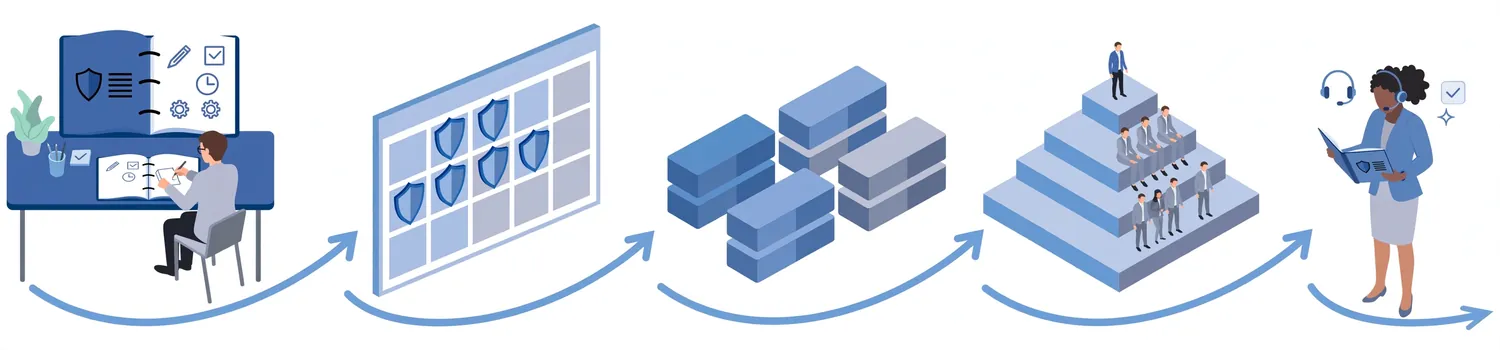
In the first week, produce a written scheduling rules document covering: your protected time windows, your meeting cluster windows, your access tier list, your meeting format preferences, your standing agenda requirement policy, your timezone and travel availability rules, and any special protocols for specific meeting types (board, investor, media).
Step 3: Establish the Weekly Calendar Review Cadence

Set a recurring 15-minute Friday check-in specifically for calendar review. Review the following week together, make adjustments, and confirm the Monday morning brief format.
Step 4: Calibrate Progressively Over 30 Days

In the first 30 days, review every triage decision your VEA makes so they can calibrate their judgment against your actual preferences. When a decision aligns with what you would have chosen, say so explicitly. When it does not, explain the reasoning. This calibration period builds the contextual intelligence that allows your VEA to operate with increasing autonomy over time.
Step 5: Expand Authority at 60 and 90 Days

At 60 days, expand the VEA’s autonomous authority to include Tier 2 and Tier 3 meeting decisions without requiring executive review. At 90 days, conduct a full calendar architecture review: is the deep work block protection working? Are meetings clustering appropriately? Is the energy profile alignment producing the intended results?
Frequently Asked Questions About Executive Assistant Calendar Management
What is executive assistant calendar management?
Executive assistant calendar management is the strategic design, active defense, and continuous optimization of an executive’s schedule by a skilled EA or virtual executive assistant. It involves protecting deep work blocks, architecting meeting clusters, triaging meeting requests against strategic priorities, applying energy-aligned scheduling, managing preparation and recovery buffers, and conducting regular calendar audits – all with the goal of ensuring the executive’s time reflects their highest-leverage priorities rather than the default accumulation of reactive meeting requests.
How many hours per week can proper calendar management recover for an executive?
Delegating calendar management to a skilled virtual EA, with proper access, a documented scheduling rules framework, and consistent deep work block protection, typically recovers 6 to 12 hours of strategic executive time per week. The specific recovery depends on the executive’s current calendar fragmentation baseline, the volume of inbound meeting requests managed, and the extent to which deep work blocks are actively defended.
What should a VEA’s calendar management authority include?
At minimum, a VEA managing an executive’s calendar should have authority to: accept or decline meeting requests without individual executive approval for defined meeting types; schedule all external calls within designated cluster windows only; defend protected focus blocks against all requests below Tier 1 access; propose agenda requirements before confirming any meeting booking; and conduct the weekly review and forward scheduling adjustments.
How does a VEA protect deep work blocks against organizational pressure?
A well-practiced VEA protects deep work blocks through a combination of: pre-emptive blocking with visible private appointments during focus windows; proactive communication to regular meeting requesters about available scheduling windows; diplomatically declining or redirecting requests that fall within protected blocks; and proposing alternative times that honor both the meeting requester’s need and the executive’s focus schedule. The key is consistent enforcement rather than case-by-case negotiation, which teaches the organization that the blocks are genuine commitments rather than soft preferences.
Should a VEA use automated scheduling tools for executive calendar management?
Automated tools such as Calendly, Reclaim.ai, or Motion can support executive assistant calendar management but should not replace the human judgment layer. Automated tools route requests within pre-defined availability windows effectively. They cannot evaluate whether a meeting is strategically appropriate, recognize relationship-sensitive situations requiring diplomatic handling, or make the nuanced access tier decisions that high-stakes executive calendars require. The best VEA calendar management combines human strategic oversight with tool-assisted execution.
How often should a VEA conduct a calendar audit?
A weekly forward review (every Friday, reviewing the coming week) should be a standing practice. A monthly deeper audit reviewing recurring meetings and cluster structure is highly valuable. A full quarterly calendar architecture review – examining deep work block effectiveness, energy alignment, and strategic priority alignment – represents the gold standard for ongoing calendar optimization.
A Well-Managed Calendar Is a Leadership Advantage
The executive assistant calendar management framework documented in this guide is not a time management technique. It is a leadership infrastructure decision.

Every CEO, founder, and senior executive who consistently produces exceptional strategic work – who makes better decisions than peers, builds stronger relationships, and leads organizations through complexity with clarity – operates with protected cognitive space that makes that quality of output possible.
That protected space does not happen by accident. It is designed, defended, and continuously optimized by a skilled virtual executive assistant who understands that calendar management at the executive level is not about filling slots: it is about ensuring that every hour of the executive’s finite working time reflects the priorities that actually determine organizational outcomes.
If you are ready to build this calendar architecture in your own schedule with the support of a VEA who has done it before, work with GPERO to access a virtual executive assistant who specializes in strategic calendar and time management for C-suite leaders who are serious about protecting their best work.